



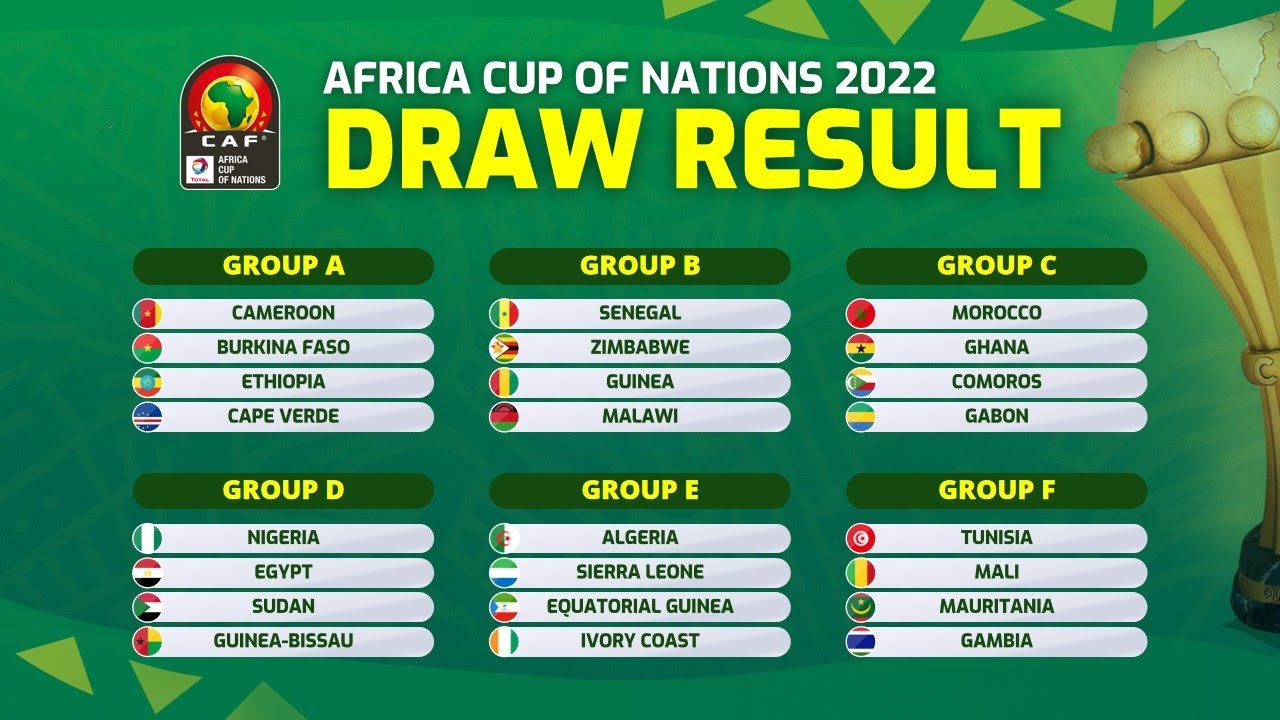
The 2022 Africa Cup of Nations (AFCON) is around the corner, and once again, African nations are caught up in a stiff battle with European and Asian football clubs over the release of players.
In recent times, foreign football clubs have made it a habit to prevent African players from representing their countries. Critics and sports enthusiasts believe that their actions go a long way in revealing the level of respect the football clubs and coaches have for the continent and its foremost football tournament.
Despite the multiple threats by football’s governing body, FIFA, to sanction clubs that refuse to release players to represent their countries in the competition, the clubs have remained adamant.
Overview of the 2022 Africa Cup of Nations Tournament
For sponsorship reasons, the 2022 Africa Cup of Nations, known as the TotalEnergies Africa Cup of Nations, will be the 33rd edition of the Africa Cup of Nations, the biennial international men’s football championship of Africa organized by the Confederation of African Football.
It is scheduled to run from Sunday, 9 Jan. 2022, to Sunday, 6 Feb. 2022 in Cameroon. Twenty-four nations will be participating in the tournament in six venues across five host cities.
History of Africa Cup of Nations
Africa Cup of Nations, also called the African Cup of Nations and African Nations Cup, is the most prestigious football (soccer) competition in Africa. It is contested by national teams and is organized by the Confédération Africaine de Football (CAF).
The competition’s format has changed over time, with the number of teams increasing from 3 in 1957 to, after several expansions, 24 in 2019. Growing participation also led to the introduction of qualifying rounds in 1968, the same year that CAF decided to hold the tournament biennially.
The Africa Cup of Nations was first held in February 1957 in Khartoum, Sudan. In the final, Egypt defeated the host nation to win the Abdel Aziz Abdallah Salem Trophy, named after its donor, an Egyptian who was Egyptian the first CAF president.
That trophy was permanently awarded to Ghana in 1978 when it became the first country to win the tournament three times. The next trophy, known as the African Unity Cup, was awarded permanently to Cameroon in 2000 when it claimed its third championship in 1978. In 2002 a new trophy called the Cup of Nations was introduced.
FIFA’s Statement on the Release of Players by Clubs
The president of FIFA, Gianni Infantino, has said clubs have an obligation to release players for international duty and has appealed for quarantine exemptions to those returning from countries on the red list.
You will recall that Premier League clubs unanimously decided not to release players for the forthcoming international break who face a 10-day quarantine on their return.
“I am calling on a show of solidarity from every member association, every league, and every club, to do what is both right and fair for the global game,” said Infantino in a statement.
“Many of the best players in the world compete in leagues in England and Spain, and we believe these countries also share the responsibility to preserve and protect the sporting integrity of competitions around the world.
“On the issue of quarantine in England, for players returning from red-list countries, I have written to [prime minister] Boris Johnson and appealed for the necessary support so players are not deprived of the opportunity of representing their countries.”
The Bottom Line
African players are excelling in different elite football clubs across Europe, Asian and American top-flight clubs, and this has made the needless battle by clubs to prevent them from representing their national teams even more difficult. Many football clubs have resulted to shameless tactics such as lying about injuries, COVID-19 restrictions, shortage of players, late invitations, etc. in order to prevent their players from participating in the competition.
Some critics support the football clubs, saying that the timing of the AFCON makes it very difficult for football clubs that are in the most important part of their football seasons to release the players.
Others argue otherwise, however, saying that players should be released for the month-long tournament regardless, especially as players are often released for the Euros and COPA America.